Why a Basic QR Menu Is No Longer Enough for Your Restaurant
A QR code that opens a PDF is not a digital menu — it is a photograph of a paper menu on a phone screen. Here is what a real digital menu does differently, and why the gap matters more than ever in 2026.
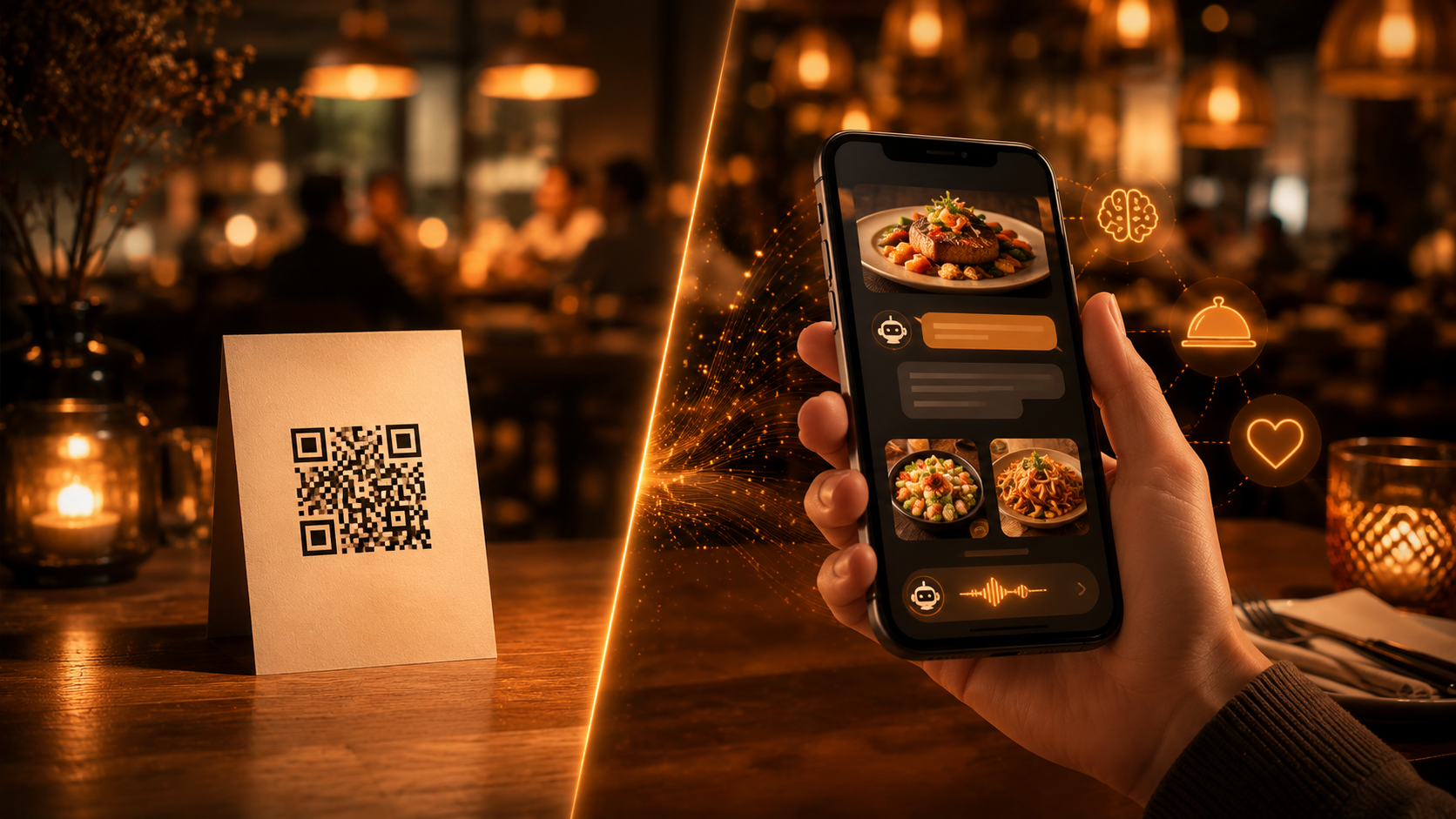
Most QR Menus Are Just Paper With a Code Sticker
When QR menus first became widespread in 2020, the bar was low. Any restaurant that replaced a laminated menu with a scannable link felt ahead of the curve. Four years later, guests have caught up — and many of them are quietly disappointed by what they find when they scan.
A guest scans a QR code. A PDF opens. It is formatted for A4 paper, so everything is tiny on a phone screen. They pinch and zoom. They look for allergen information and cannot find it. They want to know if the fish is fresh today — there is no one to ask except the server, who is currently busy with another table. They order something safe and unmemorable. The opportunity to upsell, to personalise, to delight — gone.
That is the reality of a basic QR menu in 2026. It solves exactly one problem (no physical contact) and creates several new ones.
What a Basic QR Menu Cannot Do
The limitations are not minor. They are the difference between a menu that is a passive document and one that is an active participant in the guest experience.
- It cannot answer questions. A guest with a nut allergy cannot ask the menu whether the pesto contains pine nuts. They have to interrupt a server, wait for an answer, and hope the answer is accurate. With a basic QR menu, you have digitised the menu but not the information behind it.
- It cannot filter. A vegan guest at a table of mixed eaters cannot quickly see which dishes are available to them. They scan the entire menu, mentally filtering every item, reading descriptions that do not include dietary information. It takes three times as long as it should.
- It cannot recommend. A first-time guest who asks "what is good here?" gets nothing from a static menu. No bestseller badges, no context, no suggestion based on what they have already looked at. The menu does not know they have been staring at the pasta section for two minutes.
- It cannot update in real time. If the kitchen runs out of the sea bass at 7 PM, the basic QR menu still shows it. The guest orders it. The server returns to say it is not available. The guest chooses something else with the enthusiasm of someone who already had their mind made up. This is a small disappointment that adds up across hundreds of covers.
- It cannot speak other languages. A PDF menu is printed in one language. A tourist from Japan, a business traveller from Russia, a family visiting from Brazil — they all get the same version. Some will manage. Some will order the wrong thing. Some will leave and find somewhere with a menu they can actually read.
- It generates no data. A paper menu and a PDF menu both tell you nothing about how guests interact with them. Which dishes are viewed most? Which items are looked at but never ordered? When are guests most active? A static QR menu is blind to all of this.
The Guest Experience Gap Is Wider Than It Looks
Here is what guests with dietary restrictions experience at a restaurant with a basic QR menu:
They scan the code. They scroll through a long, undifferentiated list. Nothing is tagged as gluten-free or vegan. They flag down a server and explain their requirements. The server — with the best of intentions — lists what they think is safe from memory. The guest orders cautiously. They feel like a burden rather than a valued customer. They do not come back.
Now consider the same guest at a restaurant with an AI-powered menu. They scan. They tap "filter by allergen" and select gluten. The menu shows them eight safe dishes, all with photos and descriptions. They tap on one and ask the AI "does this have any hidden dairy?" The AI checks the recipe data and confirms it does not. They order confidently. They feel genuinely looked after. They recommend the restaurant to three people with the same dietary needs.
That difference is not about technology. It is about hospitality.
What Separates a Real Digital Menu From a Digital PDF
A genuine digital menu — as opposed to a digitised paper menu — has five characteristics:
- It is interactive. Guests can ask questions, filter by preference, and receive responses based on actual menu data — not a server's best recollection.
- It is live. Availability, prices, and specials update in real time. What guests see reflects what the kitchen can actually serve right now.
- It is multilingual by default. The menu detects the guest's device language and presents itself accordingly — no language switching required, no second PDF to maintain.
- It is visual. Every dish has a photo, sized and optimised for a phone screen. Guests make decisions with their eyes first.
- It generates data. Every interaction is logged. Which dishes get the most views, which items convert, what questions are being asked. The menu becomes a source of business intelligence, not just a list of dishes.
The Invisible Cost of Keeping a Basic QR Menu
Restaurant owners who stick with a basic QR menu often reason that it is "good enough." The problem with good enough is that the cost of average is invisible. You do not see the guest who ordered the wrong dish because they could not read the description. You do not see the vegan who left without ordering because the menu gave them no help. You do not see the family that did not return because their visit felt transactional rather than welcoming.
You also do not see the revenue that a better-described, better-positioned, better-photographed menu would have generated. You just see the numbers you have — not the numbers you could have.
Upgrading Does Not Mean Starting Over
Moving from a basic QR menu to a full digital menu with AI assistance is not a months-long project. On Qrave, you can import your existing menu in under an hour, add photos progressively, activate the AI assistant, and generate new QR codes for every table. Your guests scan the same way — they just get a dramatically better experience on the other side.
The QR code on your tables is a promise. The experience that follows it either keeps that promise or breaks it. A basic QR menu that opens a static PDF breaks the promise before the guest orders a single thing.
Try Qrave free for 5 days — no credit card required. See the difference for yourself before asking your guests to settle for less.